End-to-End New Product Development: From Design Validation to Mass Production

I. Why End-to-End Product Development Matters for OEM Manufacturing Success


In today’s competitive manufacturing environment, bringing a new product from concept to scalable production has become increasingly complex. OEM brands, startups, and industrial product developers are under constant pressure to shorten development cycles, improve cost efficiency, maintain stable product quality, and accelerate time-to-market.

However, many new product development projects still rely on fragmented supply chains involving separate design firms, prototype vendors, tooling suppliers, component manufacturers, and assembly providers. While this sourcing model may appear flexible during the early development stage, it often creates operational challenges once the project moves toward pilot production and mass manufacturing.

Common issues may include:

  • communication gaps between suppliers,
  • inconsistent quality standards,
  • prolonged tooling modifications,
  • assembly compatibility problems,
  • and unexpected manufacturing costs.

This is why end-to-end product development has become increasingly important in modern OEM manufacturing. By integrating design validation, DFM analysis, rapid prototyping, tooling development, manufacturing engineering, assembly integration, and quality control into a coordinated workflow, companies can significantly improve development efficiency while reducing operational and production risks.

For products involving custom metal parts, plastic components, silicone products, and multi-component assemblies, close coordination between engineering and manufacturing teams is often critical to successful product commercialization.
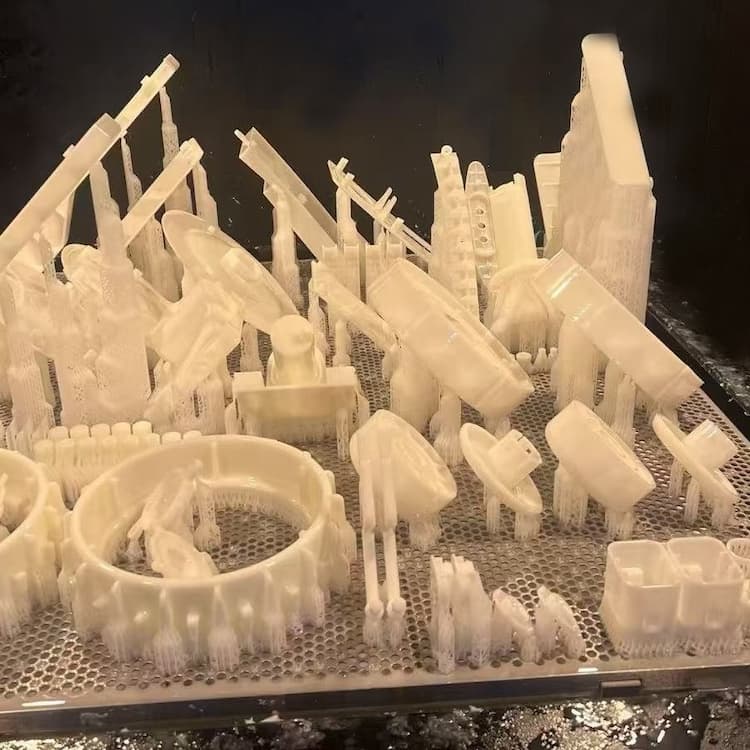
 

End-to-End New Product Development - From Design Validation to Mass Production

1.1.            Why Product Designs Are Often Not Manufacturing-Ready

One of the most common challenges in new product development is the gap between product design and manufacturing feasibility. Many products that perform well in CAD models or prototype testing may still encounter production difficulties once they enter tooling development or volume manufacturing stages.

During early-stage development, product designers often focus primarily on functionality, appearance, structural innovation, and user experience. However, without sufficient DFM (Design for Manufacturability) analysis, certain design features may introduce unnecessary manufacturing complexity.

Typical manufacturability issues may include:

  • overly complex geometries,
  • unrealistic dimensional tolerances,
  • unsuitable material selection,
  • uneven wall thickness,
  • or difficult assembly conditions.

These problems can eventually lead to unstable product quality, increased rejection rates, higher tooling costs, and reduced manufacturing efficiency during mass production.

This is why early-stage product design validation and manufacturing engineering support are essential for successful prototype-to-production manufacturing. Evaluating manufacturability early helps OEM manufacturers improve scalability while reducing downstream production risks.

1.2.            How Multiple Suppliers Create Delays in Product Development

Many OEM product development projects involve multiple specialized suppliers responsible for prototyping, tooling, component manufacturing, surface finishing, electronics integration, and final assembly. Although this fragmented sourcing strategy may provide flexibility in certain situations, it often creates significant coordination challenges throughout the development process.

When suppliers operate independently, communication gaps can easily occur between engineering modifications, tooling updates, production schedules, and quality requirements. As a result, companies frequently encounter repeated prototype iterations, delayed tooling corrections, inconsistent product quality, and extended development lead times.

In many cases, different suppliers may also use different:

  • production standards,
  • inspection methods,
  • process controls,
  • and quality systems.

Even small inconsistencies between vendors can create dimensional variation, cosmetic defects, assembly integration problems, and product reliability risks.

Integrated end-to-end manufacturing solutions help reduce these challenges by centralizing engineering communication, supplier coordination, process validation, production management, and quality control under a unified development workflow. This approach improves project visibility while helping maintain better production consistency and lead-time control.

1.3.            Why Prototype Success Does Not Always Lead to Scalable Mass Production

A functional prototype is an important milestone in new product development, but prototype success alone does not guarantee manufacturing success at scale.

Prototype parts are often produced using flexible low-volume manufacturing methods such as CNC machining, 3D printing, vacuum casting, or manual assembly processes. These methods allow rapid iteration and design flexibility, but they may not accurately reflect the limitations of scalable manufacturing processes such as injection molding, die casting, silicone compression molding, or automated assembly production.

As production volumes increase, manufacturers must consider additional factors including:

  • tooling durability,
  • cycle time optimization,
  • process capability,
  • material consistency,
  • and assembly repeatability.

Small dimensional deviations that are manageable during prototype testing may become major quality issues when thousands of units are produced continuously.

This is why scalable manufacturing validation is a critical part of end-to-end product development. Through pilot production, tooling optimization, process engineering, and assembly verification, manufacturers can identify potential production risks before full-scale mass production begins.

By validating production stability early, OEM manufacturers can improve long-term product consistency while reducing defect rates and manufacturing uncertainty during volume production.
II. What Is End-to-End Product Development in Modern Manufacturing?


End-to-end product development refers to a fully integrated manufacturing approach that supports a product throughout its entire development lifecycle — from initial design validation and prototyping to tooling development, mass production, assembly integration, and final quality control.

Unlike traditional fragmented sourcing models, end-to-end manufacturing solutions connect engineering, manufacturing, supply chain coordination, and production management into a unified workflow. This integrated approach helps OEM brands improve development efficiency while reducing communication gaps, production risks, and unnecessary operational costs.

In modern manufacturing environments, successful product commercialization requires far more than simply producing individual components. Manufacturers must also ensure that every stage of development is optimized for scalability, consistency, quality control, and long-term production stability.

A typical end-to-end product development process may include:

  • Product design validation and DFM analysis
  • Material selection and engineering optimization
  • Rapid prototyping and functional testing
  • Tooling development and process engineering
  • Pilot production and manufacturing validation
  • Mass production and assembly integration
  • Quality inspection and reliability verification
  • Packaging, logistics, and supply chain coordination

By integrating these stages into a coordinated manufacturing system, OEM companies can significantly improve prototype-to-production efficiency while accelerating time-to-market.

For products involving custom metal parts, plastic components, silicone products, and multi-component assemblies, close collaboration between engineering and manufacturing teams becomes especially important. Early coordination helps ensure that product designs remain manufacturable, scalable, and cost-effective throughout the entire production lifecycle.

2.1.            From Product Design Validation to Scalable Mass Production

One of the biggest advantages of end-to-end product development is the ability to maintain continuity throughout the entire manufacturing process. Instead of treating prototyping, tooling, production, and assembly as isolated activities, integrated manufacturing solutions align each stage around a common engineering and production objective.

This continuity becomes particularly important when products move from prototype testing into scalable manufacturing environments. Decisions made during the early design phase often have a direct impact on:

  • Tooling complexity and cost
  • Production cycle efficiency
  • Material utilization
  • Assembly compatibility
  • Product consistency
  • Long-term manufacturing stability

For example, a minor design adjustment during DFM analysis may significantly reduce mold complexity, improve injection flow, simplify assembly operations, or reduce future rejection rates during mass production.

By validating manufacturability early in development, OEM manufacturers can reduce costly engineering changes later in the project lifecycle. This approach also helps ensure that prototypes are designed with future production scalability in mind rather than focusing only on short-term functional testing.

As a result, the transition from prototype to mass production becomes more predictable, efficient, and commercially viable.

2.2.            How Integrated Manufacturing Solutions Reduce Development Risks

New product development always involves a certain level of technical, operational, and commercial risk. However, fragmented development processes often magnify these risks due to inconsistent communication, delayed problem identification, and poor coordination between suppliers.

Integrated manufacturing solutions help reduce development risks by improving visibility and control throughout the product development process.

Some of the most common risks that can be reduced through end-to-end manufacturing include:

  • Design changes discovered too late during tooling production
  • Component mismatch during assembly integration
  • Unstable product quality during pilot production
  • Production delays caused by supplier coordination problems
  • Excessive manufacturing costs due to poor DFM optimization
  • Supply chain disruption during volume scaling
  • Repeated prototype iterations caused by incomplete engineering validation

With centralized engineering support and coordinated manufacturing management, problems can often be identified and corrected much earlier in the development cycle.

This proactive approach allows OEM product developers to:

  • shorten development lead times,
  • improve production predictability,
  • reduce manufacturing waste,
  • and optimize overall project costs.

For complex products requiring multiple manufacturing processes such as CNC machining, plastic injection molding, silicone molding, surface finishing, and final assembly integration, risk reduction becomes even more valuable for maintaining stable production schedules and product quality.

2.3.            The Role of Engineering, Tooling, and Assembly Integration Services

Successful product development depends not only on manufacturing capability, but also on the ability to coordinate engineering, tooling, and assembly processes into a unified production system.

Engineering support plays a critical role during early-stage product development by helping evaluate:

  • manufacturability,
  • material compatibility,
  • structural feasibility,
  • tolerance management,
  • and process optimization.

Once the product design is validated, tooling development becomes the foundation for scalable manufacturing. Well-designed tooling directly affects:

  • production efficiency,
  • dimensional consistency,
  • surface quality,
  • tooling lifespan,
  • and long-term manufacturing costs.

Different manufacturing processes may require specialized tooling systems, including:

  • plastic injection molds,
  • die casting molds,
  • silicone compression molds,
  • stamping dies,
  • machining fixtures,
  • and assembly jigs.

At the same time, assembly integration services help ensure that independently manufactured components can function together reliably within the final product system. This is particularly important for products involving:

  • metal and plastic hybrid assemblies,
  • silicone sealing components,
  • electronic sub-assemblies,
  • mechanical motion systems,
  • or multi-material consumer products.

By integrating engineering, tooling, manufacturing, and assembly management under a coordinated workflow, end-to-end manufacturing partners can help OEM brands improve both product quality and production scalability while reducing long-term operational complexity.

III. Key Stages of End-to-End New Product Development and Manufacturing


Successful end-to-end product development requires more than simply moving a product from prototype to production. Each stage of the manufacturing process must be carefully coordinated to ensure that the product remains manufacturable, scalable, cost-effective, and commercially viable throughout its entire lifecycle.

In modern OEM manufacturing, product commercialization typically involves multiple interconnected processes including:

  • engineering validation,
  • rapid prototyping,
  • tooling development,
  • process optimization,
  • pilot production,
  • and assembly integration.

When these stages are managed within an integrated manufacturing workflow, companies can reduce development risks while improving production efficiency and long-term product consistency.

3.1.            Product Design Validation and DFM Analysis for Manufacturing

Product design validation is one of the most important early-stage activities in new product development. Before investing in tooling or volume production, manufacturers must verify that the product design is suitable for scalable manufacturing processes.

At this stage, engineering teams typically evaluate:

  • dimensional tolerances,
  • structural feasibility,
  • material compatibility,
  • assembly conditions,
  • and overall manufacturability.

DFM (Design for Manufacturability) analysis plays a critical role in identifying potential production challenges before they become costly manufacturing problems. Even small design optimizations during this phase can significantly improve:

  • tooling efficiency,
  • production yield,
  • cycle time,
  • assembly stability,
  • and long-term manufacturing cost control.

For example, DFM optimization may involve:

  • simplifying part geometry,
  • adjusting draft angles,
  • improving wall thickness consistency,
  • reducing unnecessary undercuts,
  • or optimizing fastening structures for easier assembly.

For products involving plastic injection molding, CNC machining, silicone molding, or die casting, early manufacturing validation helps ensure that the product design remains compatible with scalable production requirements.

By integrating engineering review and DFM analysis early in the development process, OEM manufacturers can reduce repeated revisions while accelerating the transition from prototype to production.

3.2.            Rapid Prototyping Services for Functional Product Testing

After the initial product design is validated, rapid prototyping becomes an essential step for evaluating functionality, structural performance, assembly compatibility, and overall product feasibility.

Rapid prototyping allows engineering teams to quickly transform digital product concepts into physical samples for:

  • functional testing,
  • appearance evaluation,
  • ergonomic verification,
  • assembly trials,
  • and design optimization.

Depending on the product structure and development objectives, prototype manufacturing methods may include:

  • CNC machining,
  • 3D printing,
  • vacuum casting,
  • silicone prototype molding,
  • sheet metal fabrication,
  • or low-volume injection molding.

Each prototyping method offers different advantages in terms of:

  • speed,
  • material simulation,
  • dimensional accuracy,
  • surface finish,
  • and production cost.

For example, CNC machining is often suitable for high-precision functional prototypes, while 3D printing provides greater flexibility for rapid structural verification during early-stage design iterations.

Rapid prototyping also helps reduce development risks by allowing manufacturers to identify potential design or assembly issues before tooling investment begins. This shortens engineering revision cycles while improving confidence in the final product design.

In many OEM manufacturing projects, effective prototype validation can significantly accelerate product development timelines and improve overall manufacturing readiness for pilot production.

3.3.            Tooling Development for Plastic, Metal, and Silicone Parts Manufacturing

Once the prototype design is validated, tooling development becomes the foundation for scalable and repeatable mass production.

In high-volume manufacturing environments, tooling quality directly affects:

  • dimensional consistency,
  • production efficiency,
  • surface finish quality,
  • assembly stability,
  • and long-term manufacturing cost.

Different manufacturing processes require specialized tooling systems depending on the product material, geometry, and production requirements.

Common tooling categories may include:

  • plastic injection molds,
  • die casting molds,
  • silicone compression molds,
  • metal stamping dies,
  • machining fixtures,
  • and assembly jigs.

Tooling development is not simply a machining process — it also involves extensive manufacturing engineering optimization. During this stage, manufacturers often evaluate:

  • mold flow behavior,
  • cooling efficiency,
  • gate location,
  • material shrinkage,
  • tooling durability,
  • and cycle time optimization.

For products involving custom plastic, metal, and silicone components, proper tooling design is critical for maintaining stable production quality during long-term manufacturing operations.

In addition, early collaboration between tooling engineers and assembly teams helps ensure that independently manufactured components can integrate smoothly during final product assembly.

Well-optimized tooling systems not only improve production scalability, but also help reduce defect rates, maintenance costs, and manufacturing downtime throughout the product lifecycle.

3.4.            Pilot Production and Low-Volume Manufacturing Validation

Before full-scale mass production begins, manufacturers typically conduct pilot production and low-volume manufacturing validation to verify that the entire production system can operate reliably under real manufacturing conditions.

Pilot production serves as a critical transition stage between prototype development and scalable manufacturing. At this stage, manufacturers evaluate:

  • process stability,
  • tooling performance,
  • assembly efficiency,
  • production yield,
  • inspection standards,
  • and packaging compatibility.

Unlike prototype manufacturing, pilot production more closely reflects actual production environments, including:

  • production cycle timing,
  • operator workflow,
  • material consistency,
  • and supply chain coordination.

This stage also helps identify hidden production risks that may not appear during prototype testing, such as:

  • tolerance accumulation during assembly,
  • tooling wear,
  • unstable material behavior,
  • cosmetic inconsistencies,
  • or insufficient production efficiency.

For OEM manufacturers, pilot production validation is essential for reducing uncertainty before large-scale manufacturing investment. It allows engineering and production teams to optimize manufacturing processes while improving long-term production consistency.

In many cases, low-volume manufacturing also supports:

  • customer approval testing,
  • market validation,
  • regulatory evaluation,
  • and early product launch preparation.

By validating manufacturing readiness before mass production, companies can significantly reduce future production disruptions and quality-related risks.

3.5.            Mass Production and Product Assembly Integration Services

After pilot production validation is completed, the project can transition into scalable mass production and final assembly integration.

At this stage, manufacturing success depends heavily on the ability to maintain:

  • stable product quality,
  • consistent production efficiency,
  • reliable supply chain coordination,
  • and repeatable assembly performance.

For products involving multiple custom components, assembly integration becomes increasingly important during volume manufacturing. Independently manufactured metal parts, plastic components, silicone products, electronic modules, and fastening systems must function together reliably within the final product assembly.

Assembly integration services may include:

  • mechanical assembly,
  • sub-assembly integration,
  • adhesive bonding,
  • ultrasonic welding,
  • electrical integration,
  • functional testing,
  • labeling and packaging,
  • and final quality inspection.

At the same time, production management teams must continuously monitor:

  • process capability,
  • defect rates,
  • production efficiency,
  • supplier stability,
  • and inventory coordination.

Integrated end-to-end manufacturing solutions help streamline this entire process by aligning engineering, production, quality control, and logistics management within a unified operational system.

This approach not only improves manufacturing scalability, but also helps OEM brands maintain better cost control, product consistency, and supply chain efficiency throughout long-term production programs.

IV. Benefits of Integrated Product Development and Manufacturing Services


As global supply chains become more complex and product lifecycles continue to shorten, OEM companies are placing greater emphasis on manufacturing efficiency, development speed, and operational flexibility. This is one of the main reasons why integrated product development and end-to-end manufacturing services have become increasingly valuable across modern manufacturing industries.

Compared with fragmented sourcing models, integrated manufacturing solutions allow companies to coordinate engineering, prototyping, tooling, production, assembly, and quality management through a more unified workflow. This not only improves operational visibility, but also helps reduce delays, duplicated effort, and long-term manufacturing risks.

For products involving custom metal parts, plastic components, silicone products, and multi-process assemblies, centralized project management often creates substantial advantages throughout the entire product lifecycle.

4.1.            Faster Time-to-Market Through Integrated Manufacturing Solutions

In highly competitive industries, reducing product development lead time is often critical for commercial success. Delayed product launches may result in lost market opportunities, slower revenue generation, and reduced competitive advantage.

Integrated manufacturing solutions help accelerate time-to-market by improving coordination between:

  • engineering teams,
  • prototype development,
  • tooling production,
  • manufacturing operations,
  • and assembly integration.

Instead of transferring projects between multiple independent suppliers, end-to-end manufacturing partners can streamline communication and decision-making throughout the development process.

This allows companies to:

  • shorten engineering revision cycles,
  • reduce tooling modification delays,
  • accelerate prototype validation,
  • improve production scheduling,
  • and optimize project execution efficiency.

In many cases, early collaboration between design, tooling, and manufacturing teams can significantly reduce development bottlenecks before they impact production timelines.

For OEM manufacturers launching new products into fast-moving markets, integrated product development can provide a major advantage in achieving faster commercialization and more predictable production scheduling.

4.2.            Better Cost Control in OEM Product Development Projects

Manufacturing cost control is not determined solely by material pricing or labor cost. In many new product development projects, hidden operational inefficiencies often create far greater long-term expenses.

Fragmented manufacturing processes may lead to:

  • repeated engineering revisions,
  • duplicated tooling adjustments,
  • inconsistent production standards,
  • excess inventory,
  • production downtime,
  • and unnecessary supplier management costs.

Integrated end-to-end manufacturing solutions help improve cost control by aligning engineering decisions with long-term production efficiency from the beginning of the project lifecycle.

For example, early DFM optimization may help:

  • simplify tooling structures,
  • reduce machining complexity,
  • shorten production cycle times,
  • improve material utilization,
  • and reduce assembly labor requirements.

At the same time, centralized supplier coordination and assembly management can help reduce administrative overhead while improving purchasing efficiency and inventory planning.

Over the long term, optimized manufacturing workflows often contribute to:

  • lower rejection rates,
  • reduced maintenance costs,
  • improved production yield,
  • and better operational scalability.

For OEM companies developing high-volume products, these improvements can create significant cost advantages throughout the entire production lifecycle.

4.3.            Improved Product Quality and Supply Chain Coordination

Maintaining stable product quality across multiple production stages is one of the biggest challenges in OEM manufacturing. When different suppliers manage separate parts of the production process independently, quality consistency often becomes difficult to control.

Integrated manufacturing systems help improve quality management by establishing more consistent:

  • engineering standards,
  • inspection procedures,
  • process controls,
  • and production documentation.

This coordinated approach reduces variation between suppliers while improving traceability throughout the manufacturing process.

At the same time, integrated supply chain coordination helps manufacturers better manage:

  • material sourcing,
  • production scheduling,
  • inventory control,
  • logistics planning,
  • and component compatibility.

For products involving precision metal parts, plastic assemblies, silicone sealing components, or multi-material integration, even small inconsistencies between suppliers may create assembly problems or long-term reliability risks.

By centralizing engineering communication and quality management within a unified manufacturing workflow, OEM companies can improve:

  • product consistency,
  • supply chain stability,
  • production predictability,
  • and customer satisfaction.

This becomes especially important for industries requiring high reliability and regulatory compliance, such as medical devices, dental products, industrial equipment, and consumer electronics.

4.4.            Reduced Manufacturing Risks from Prototype to Production

One of the greatest advantages of end-to-end product development is the ability to reduce manufacturing risks before they escalate into costly production problems.

In traditional fragmented development models, engineering issues are often discovered too late — sometimes only after tooling investment or mass production has already begun. At that stage, corrective actions may require:

  • tooling redesign,
  • production interruption,
  • supplier replacement,
  • or large-scale product rework.

Integrated manufacturing solutions help minimize these risks by improving communication and validation throughout every stage of the development process.

Potential production challenges can often be identified earlier through:

  • DFM analysis,
  • prototype evaluation,
  • tooling optimization,
  • pilot production validation,
  • and assembly verification.

This proactive approach allows manufacturers to improve:

  • process stability,
  • manufacturing scalability,
  • assembly reliability,
  • and long-term production consistency.

For OEM brands managing complex multi-component products, early risk reduction is especially important for maintaining stable delivery schedules and protecting long-term product quality.

By integrating engineering, tooling, manufacturing, and assembly management into a coordinated operational system, companies can significantly improve production confidence while reducing uncertainty during volume manufacturing.

V. Industries That Benefit From End-to-End Manufacturing Solutions


As product development becomes increasingly complex across global industries, more OEM brands are adopting end-to-end manufacturing solutions to improve efficiency, scalability, and supply chain coordination.

Industries involving multi-component assemblies, precision tolerances, or multi-material integration often benefit the most from centralized product development and manufacturing management. By integrating engineering validation, prototyping, tooling, production, assembly, and quality control into a unified workflow, companies can better manage both technical complexity and long-term production stability.

End-to-end product development is especially valuable for products requiring:

  • custom metal parts,
  • plastic injection molded components,
  • silicone products,
  • precision assemblies,
  • and scalable mass production support.

5.1.            Medical Device and Dental Product Manufacturing

Medical device and dental product manufacturing require high levels of precision, consistency, and quality control throughout the entire production process. Many products in these industries involve complex assemblies combining:

  • precision metal components,
  • medical-grade plastic parts,
  • silicone sealing elements,
  • and functional sub-assemblies.

In addition to dimensional accuracy, manufacturers must also consider:

  • material biocompatibility,
  • product cleanliness,
  • traceability,
  • packaging standards,
  • and regulatory compliance requirements.

Integrated manufacturing solutions help medical and dental OEM companies improve coordination between engineering, tooling, manufacturing, and quality inspection processes. This becomes especially important during:

  • prototype validation,
  • pilot production,
  • and long-term volume manufacturing.

For products requiring stable repeatability and strict quality management, centralized manufacturing control can significantly reduce production variability and improve long-term supply chain reliability.

5.2.            Consumer Electronics and Smart Hardware Product Development

Consumer electronics and smart hardware products often require highly coordinated manufacturing processes involving multiple materials, precision assemblies, and cosmetic surface requirements.

Typical products may combine:

  • plastic housings,
  • CNC machined metal parts,
  • silicone buttons or seals,
  • electronic modules,
  • and decorative finishing components.

At the same time, modern consumer products are expected to achieve:

  • compact structural design,
  • high assembly precision,
  • attractive cosmetic quality,
  • and rapid production scalability.

Integrated end-to-end manufacturing solutions help consumer electronics companies accelerate product development while improving coordination between:

  • industrial design,
  • engineering validation,
  • tooling development,
  • assembly integration,
  • and production management.

This approach is particularly valuable for companies operating in fast-moving markets where shorter product lifecycles and faster time-to-market are critical for maintaining competitiveness.

By streamlining prototype-to-production manufacturing, OEM brands can improve launch efficiency while reducing production delays and quality-related risks.

5.3.            Industrial Equipment and Automotive Parts Manufacturing

Industrial equipment and automotive component manufacturing often involve demanding requirements for:

  • structural durability,
  • dimensional stability,
  • production repeatability,
  • and long-term operational reliability.

Products in these industries frequently require:

  • precision machining,
  • die casting,
  • injection molding,
  • silicone sealing systems,
  • and complex mechanical assemblies.

In addition, manufacturers must often manage:

  • tight dimensional tolerances,
  • heavy-duty operating conditions,
  • long production cycles,
  • and large-scale supply chain coordination.

End-to-end manufacturing solutions help industrial OEM companies improve consistency throughout the entire production process by integrating engineering support, tooling optimization, process validation, and assembly management within a centralized manufacturing workflow.

This approach can significantly improve:

  • production efficiency,
  • quality stability,
  • maintenance predictability,
  • and long-term manufacturing scalability.

For automotive and industrial applications where product reliability is directly connected to operational performance, early manufacturing validation and coordinated production management are particularly important.

5.4.            Custom Metal, Plastic, and Silicone Product Assembly Projects

Many modern OEM products no longer rely on a single manufacturing process or material type. Instead, they often combine custom metal parts, plastic components, silicone products, electronic assemblies, and decorative finishing systems within one integrated product structure.

Managing these multi-process manufacturing projects through separate suppliers can quickly create:

  • communication inefficiencies,
  • assembly compatibility issues,
  • inconsistent quality standards,
  • and increased project management complexity.

Integrated manufacturing solutions help simplify these challenges by coordinating:

  • engineering review,
  • material selection,
  • tooling development,
  • component production,
  • assembly integration,
  • and final quality inspection

within a unified development system.

This is especially beneficial for products requiring:

  • multi-material integration,
  • customized assembly solutions,
  • functional sealing systems,
  • precision fitting structures,
  • or scalable production support.

By consolidating manufacturing and assembly operations under a coordinated workflow, OEM companies can improve overall development efficiency while reducing operational complexity throughout the product lifecycle.

VI. How to Choose the Right End-to-End Manufacturing Partner


Selecting the right end-to-end manufacturing partner is one of the most important decisions in new product development. Beyond manufacturing capability alone, OEM companies must evaluate whether a supplier can support the entire product lifecycle — from engineering validation and prototyping to mass production and assembly integration.

An experienced manufacturing partner should not only be able to produce parts, but also help improve manufacturability, reduce development risks, optimize production efficiency, and support long-term scalability.

For products involving custom metal parts, plastic components, silicone products, and multi-process assemblies, supplier selection becomes even more critical because multiple manufacturing disciplines must work together within a coordinated production system.

6.1.            Engineering and DFM Capabilities for New Product Development

Strong engineering support is one of the most important indicators of a capable end-to-end manufacturing partner.

During the early development stage, experienced engineering teams can help evaluate:

  • product manufacturability,
  • structural feasibility,
  • material compatibility,
  • assembly efficiency,
  • and cost optimization opportunities.

DFM (Design for Manufacturability) analysis is particularly important because early engineering decisions often have a major impact on:

  • tooling complexity,
  • production efficiency,
  • assembly stability,
  • rejection rates,
  • and long-term manufacturing cost.

A qualified OEM manufacturing partner should be able to provide practical engineering feedback before tooling investment begins. This may include recommendations related to:

  • dimensional tolerances,
  • wall thickness optimization,
  • fastening structures,
  • draft angle adjustments,
  • material selection,
  • and assembly simplification.

By integrating engineering review into the development process early, companies can reduce unnecessary revisions while improving the scalability of future mass production.

6.2.            Multi-Process Manufacturing Experience Across Metal, Plastic, and Silicone Components

Many modern OEM products require multiple manufacturing technologies working together within the same product assembly. As a result, suppliers with experience across several manufacturing processes often provide greater operational flexibility and better project coordination.

A capable end-to-end manufacturing partner may support processes such as:

  • CNC machining,
  • plastic injection molding,
  • silicone molding,
  • die casting,
  • sheet metal fabrication,
  • surface finishing,
  • and product assembly integration.

This multi-process capability becomes especially valuable when products involve:

  • metal-to-plastic assemblies,
  • silicone sealing systems,
  • decorative cosmetic components,
  • precision mechanical structures,
  • or customized multi-material integration.

Instead of managing separate vendors for each process, OEM companies can streamline development through a more centralized manufacturing workflow.

This approach often helps improve:

  • engineering communication,
  • assembly compatibility,
  • production scheduling,
  • quality consistency,
  • and supply chain efficiency.

For complex product development projects, manufacturing integration across multiple processes can significantly reduce operational complexity throughout the production lifecycle.

6.3.            Quality Control Systems for Scalable Mass Production

As products move from prototype development into high-volume manufacturing, quality consistency becomes increasingly important. A reliable manufacturing partner should have established quality control systems capable of supporting scalable and repeatable production environments.

Effective quality management typically includes:

  • incoming material inspection,
  • in-process quality monitoring,
  • dimensional verification,
  • assembly inspection,
  • functional testing,
  • and final product validation.

In addition to inspection capability, manufacturers should also maintain:

  • standardized production procedures,
  • process documentation,
  • traceability systems,
  • and continuous process improvement practices.

For products requiring precision tolerances or complex assembly integration, stable quality systems help reduce:

  • dimensional variation,
  • cosmetic defects,
  • assembly failures,
  • and long-term reliability risks.

OEM companies should also evaluate whether a manufacturing partner can maintain consistent production quality during:

  • pilot production,
  • volume scaling,
  • and long-term manufacturing programs.

Strong quality management systems are often essential for industries such as:

  • medical devices,
  • dental products,
  • consumer electronics,
  • automotive components,
  • and industrial equipment manufacturing.

6.4.            Supply Chain Integration and Assembly Management Services

In many new product development projects, manufacturing success depends not only on component production, but also on the ability to coordinate supply chain operations and final product assembly efficiently.

As products become more complex, OEM companies often need support for:

  • component sourcing,
  • inventory coordination,
  • production scheduling,
  • assembly integration,
  • packaging management,
  • and logistics planning.

Integrated manufacturing partners can help centralize these activities within a more controlled operational framework.

Assembly management services may include:

  • sub-assembly integration,
  • mechanical assembly,
  • adhesive bonding,
  • ultrasonic welding,
  • electronic integration,
  • labeling and packaging,
  • and final product inspection.

By coordinating these processes under one manufacturing system, companies can reduce communication delays while improving assembly consistency and production visibility.

For OEM products involving multiple custom components and suppliers, integrated supply chain management often provides major advantages in:

  • lead-time control,
  • production efficiency,
  • inventory optimization,
  • and long-term operational scalability.

Ultimately, a strong end-to-end manufacturing partner should function not only as a supplier, but also as a long-term engineering and production support resource throughout the entire product lifecycle.

VII. Why End-to-End Manufacturing Accelerates Successful Product Commercialization


In modern OEM manufacturing, successful product development depends on far more than innovative product design alone. To achieve scalable and commercially viable production, companies must also ensure that engineering validation, manufacturing processes, tooling systems, assembly integration, and supply chain coordination can operate together efficiently throughout the entire product lifecycle.

This is why end-to-end product development has become increasingly important across industries requiring custom metal parts, plastic components, silicone products, and complex product assemblies.

By integrating:

  • product design validation,
  • DFM analysis,
  • rapid prototyping,
  • tooling development,
  • pilot production,
  • mass manufacturing,
  • assembly integration,
  • and quality control

within a unified manufacturing workflow, OEM companies can significantly improve both development efficiency and long-term production stability.

Compared with fragmented sourcing models, integrated manufacturing solutions help reduce:

  • communication gaps,
  • production delays,
  • repeated engineering revisions,
  • supply chain complexity,
  • and manufacturing risks.

At the same time, companies can improve:

  • time-to-market,
  • production scalability,
  • cost control,
  • product consistency,
  • and operational visibility.

As product structures and global supply chains continue to become more complex, the ability to coordinate engineering, manufacturing, and assembly integration under one development system will remain a major competitive advantage for OEM brands.

Whether developing medical devices, consumer electronics, industrial equipment, dental products, or multi-material assemblies, choosing the right end-to-end manufacturing partner can play a critical role in transforming product concepts into scalable and commercially successful production programs.

VIII. Frequently Asked Questions About End-to-End Product Development


8.1.            What Is End-to-End Product Development?

End-to-end product development refers to an integrated manufacturing approach that supports a product throughout its entire lifecycle — including design validation, prototyping, tooling development, pilot production, mass manufacturing, assembly integration, and quality control.

This approach helps OEM companies improve manufacturing efficiency while reducing development risks and supply chain complexity.

8.2.            Why Is DFM Important in Manufacturing?

DFM (Design for Manufacturability) helps manufacturers evaluate whether a product design is suitable for efficient and scalable production.

Early DFM analysis can help:

  • reduce tooling complexity,
  • improve production efficiency,
  • optimize assembly processes,
  • reduce rejection rates,
  • and lower long-term manufacturing costs.

8.3.            What Is the Difference Between Prototype and Pilot Production?

Prototype manufacturing is primarily used for early-stage functional testing and design validation. It often involves flexible low-volume production methods such as CNC machining or 3D printing.

Pilot production, however, is conducted before mass production to validate:

  • tooling performance,
  • process stability,
  • assembly efficiency,
  • and manufacturing scalability under real production conditions.

8.4.            Can One Manufacturer Handle Metal, Plastic, and Silicone Components Together?

Yes. Many end-to-end manufacturing partners provide integrated production capabilities across:

  • CNC machining,
  • plastic injection molding,
  • silicone molding,
  • die casting,
  • assembly integration,
  • and quality control services.

This centralized approach helps improve project coordination while reducing supply chain complexity.

8.5.            How Long Does Prototype-to-Production Manufacturing Usually Take?

The development timeline depends on product complexity, tooling requirements, manufacturing processes, and production volume.

In many OEM product development projects, the complete process from prototype development to mass production may range from several weeks to several months depending on:

  • engineering revisions,
  • tooling lead times,
  • pilot production validation,
  • and assembly requirements.

Integrated manufacturing solutions can often help shorten development timelines through better coordination and streamlined production management.

IX. Why GEMS Supports More Efficient OEM Product Development


At GEMS, we understand that successful new product development requires far more than individual manufacturing processes. Transforming an idea into a scalable commercial product depends on close coordination between engineering validation, manufacturability optimization, tooling development, production planning, and assembly integration throughout the entire development lifecycle.

By combining custom metal manufacturing, plastic injection molding, silicone production, and integrated assembly capabilities within one operational framework, GEMS helps OEM customers streamline product development while reducing communication gaps and manufacturing complexity.

Our engineering-driven approach allows customers to move more efficiently from:

  • concept validation,
  • to prototype development,
  • pilot production,
  • and scalable mass manufacturing.


Whether supporting medical devices, industrial equipment, consumer products, or customized assemblies, GEMS focuses on helping OEM companies improve manufacturability, reduce development risks, and accelerate commercialization readiness through integrated end-to-end manufacturing solutions. Contact us today [INFO@GEMS-MFG] to explore our offerings and receive an instant quote. Your manufacturing goals are our priority.


End-to-End New Product Development: From Design Validation to Mass Production

Why GEMS-MFG?

Integrated Factory Resources

We are your one-stop manufacturing solution provider for customized products with the joint effort & support from our 120 partnership subcontractors mainly for the production of metals & plastics. We can expand much faster but the top management decide to keep GEMS a compact, dedicated and professional company, which allows our team to really focus and deliver on your projects without any excuse or compromise. We strive to be a long-term, reliable and trustworthy partner of our customers rather than just being a contractor, and look forward to growing the company with customers’ success.

Manufacturing Veteran Team

With the passing years, we are proud to build up a manufacturing veteran team with rich experience and full expertise to fulfill your specific demand. From mold making, injection molding, die casting, stamping and sheet metal, to 2nd processes like CNC machining, oil spraying, powder coating and chrome plating, and then assembling and packaging and related, we always have someone in house to be an expert to resolve the issues in different stages of product development. We also specialize in providing charger, cable and hub, plus other electronic accessories that support a complete set of product.

Strong Project Management

“Think global, execute local” is the principle of our work. Time, quality and cost are the three key elements to be considered throughout the product development from concept design to mass production. A detailed plan with weekly conference call update is a critical gateway to ensure these three key elements are successfully implemented, also assuring that all parties are on the same page. Communication is the Secret to Success . Everyone works independently to take care his own job, but together we are a team to get things done and are your daily eyes and ears onsite in China.

Flexible Operation & Customization

We offer a wide variety of products, such as mold, component and assembly product, and certain value-added services. For logo or branding product, we have in house resources to complete a color mix that can perfectly match a brand’s unique colors in fast and cost-effective way. Understood the client needs production parts but having a hard time to find a vendor since the order quantity is as low as 1000 or lower. GEMS is well set up for low volume injection molding or die casting projects. Surely our team is also capable of building SPI Class 101 mold that is designed & made for 1 million cycles or more of producing the same high quality parts consistently.