PPSU Injection Molding: Properties, Benefits, and Applications in High-Performance Plastics

I. Introduction to PPSU Injection Molding


Polyphenylsulfone (PPSU) is a high-performance thermoplastic that has gained increasing importance across industries where durability, heat resistance, and chemical stability are critical. Unlike commodity plastics, PPSU delivers exceptional toughness and dimensional stability, even under extreme environmental conditions. These qualities make it a preferred choice for applications that must withstand repeated sterilization, continuous stress, or contact with aggressive chemicals.

Plastic injection molding has become the most efficient and precise method to shape PPSU into functional parts. Through this process, manufacturers can produce highly complex geometries with repeatable accuracy, making PPSU suitable for a wide spectrum of advanced applications ranging from surgical instruments and sterilization trays to aerospace connectors and industrial pump housings.

As industries push for lightweight, long-lasting, and cost-effective alternatives to metal and traditional plastics, PPSU injection molding stands out as a reliable manufacturing solution. The combination of PPSU’s intrinsic material properties with the scalability of injection molding offers unmatched performance and value in demanding sectors.
 

II. Unique Properties of PPSU Material


PPSU stands apart from conventional plastics due to its exceptional balance of mechanical, thermal, and chemical properties. These qualities allow it to perform reliably in environments where other engineering plastics fail. The following are the most critical properties that define PPSU’s value:

  1. High Thermal Stability
    PPSU maintains structural integrity at continuous-use temperatures up to 180 °C, with a glass transition temperature around 220 °C. It does not warp or degrade under sterilization processes such as steam autoclaving, which makes it highly suitable for repeated high-temperature exposure.
  2. Exceptional Toughness and Impact Resistance
    Compared to polycarbonate and polysulfone, PPSU demonstrates significantly higher impact resistance. This toughness ensures that molded parts can withstand accidental drops, mechanical stress, and long-term wear without cracking or losing strength.
  3. Hydrolysis Resistance and Sterilization Durability
    PPSU resists hydrolytic degradation, making it stable in hot water and steam environments. It can endure hundreds of autoclave sterilization cycles without loss of mechanical performance or discoloration. This is a key reason for its adoption in the medical and healthcare industries.
  4. Dimensional Stability and Transparency
    PPSU exhibits low creep and minimal dimensional change under load, which is essential for precision-molded components. Additionally, it offers a naturally transparent appearance, allowing manufacturers to produce clear or tinted parts without sacrificing performance.
  5. Chemical Resistance
    PPSU resists exposure to detergents, disinfectants, and a wide range of chemicals. Unlike polycarbonate, it is not prone to environmental stress cracking when in contact with aggressive agents.
  6. Biocompatibility and Regulatory Compliance
    Many PPSU grades meet FDA, NSF, and ISO 10993 requirements, enabling safe use in medical devices and food-contact applications. This regulatory acceptance accelerates product development in industries with strict safety standards.

Taken together, these unique properties make PPSU an indispensable material for manufacturing high-performance plastic components that require durability, reliability, and safety under demanding operating conditions.

III. Advantages of PPSU Injection Molding


The combination of PPSU’s material properties with the efficiency of injection molding provides manufacturers with a powerful solution for creating high-performance parts. Unlike machining or thermoforming, injection molding enables consistent, scalable production with greater design freedom. Key advantages include:

  1. Complex Geometry with Precision
    Injection molding allows PPSU to be shaped into intricate designs with tight tolerances. This is particularly valuable for medical and aerospace components where precision is non-negotiable.
  2. Scalability for Production Volumes
    Once the mold is built, PPSU parts can be produced in large quantities with consistent quality. This makes injection molding cost-effective for both medium- and high-volume manufacturing, compared to machining from solid PPSU stock.
  3. Durability and Long Service Life
    The toughness and chemical resistance of PPSU translate into longer-lasting components. Injection-molded parts can withstand repeated sterilization, exposure to aggressive environments, and mechanical stress, ensuring excellent return on investment.
  4. Weight Reduction Compared to Metals
    PPSU provides comparable strength and toughness to some lightweight metals but at a fraction of the weight. This advantage is crucial for aerospace, automotive, and portable medical devices where weight savings directly impact performance and usability.
  5. Consistency in Mass Production
    Injection molding ensures uniformity across all parts, reducing variability and minimizing rejection rates. This reliability is critical when producing medical devices or aerospace components, where safety standards are uncompromising.
  6. Design Flexibility
    Features such as undercuts, living hinges, and integrated assemblies can be molded directly into PPSU components, eliminating secondary processes and reducing overall production costs.

By combining these advantages, PPSU injection molding enables manufacturers to meet demanding functional requirements while optimizing costs, production speed, and reliability.

IV. Processing Guidelines for PPSU in Injection Molding


While PPSU offers outstanding performance, it also requires careful handling during the injection molding process to achieve consistent results. Its high processing temperatures and sensitivity to moisture demand precise control of both material preparation and mold conditions. Key guidelines include:

  1. Pre-Drying and Moisture Management
    PPSU is hygroscopic, meaning it readily absorbs moisture from the environment. If not properly dried, moisture can cause surface defects, bubbles, or hydrolytic degradation during molding. Pre-drying at 150 °C for 3–4 hours is typically recommended to ensure optimal performance.
  2. Processing Temperature Range
    PPSU must be processed at high melt temperatures, usually between 340–400 °C. Maintaining uniform barrel temperature is critical to prevent thermal degradation, which could reduce part performance and aesthetics.
  3. Mold Design Considerations
    Mold temperatures between 160–200 °C are recommended for optimal surface finish and dimensional stability. Because PPSU has relatively high viscosity, careful gating and venting design is necessary to ensure complete filling of complex geometries without defects.
  4. Shrinkage and Flow Characteristics
    PPSU exhibits relatively low shrinkage, typically in the range of 0.5–0.7%, which helps in achieving precise tolerances. However, its flow properties are less favorable than commodity plastics, requiring higher injection pressures and well-balanced runner systems.
  5. Cycle Time Optimization
    Due to high mold temperatures and PPSU’s thermal requirements, cycle times may be longer compared to other engineering plastics. However, optimized cooling systems and hot-runner designs can help improve efficiency without compromising quality.
  6. Post-Processing and Sterilization
    PPSU parts often undergo secondary processes such as annealing to relieve internal stresses. They are also highly compatible with repeated sterilization methods, including autoclaving, gamma radiation, and chemical disinfection, without significant degradation.

By following these processing guidelines, manufacturers can achieve reliable, high-quality PPSU molded parts that fully leverage the material’s performance potential.

V. Applications of PPSU Injection Molded Parts


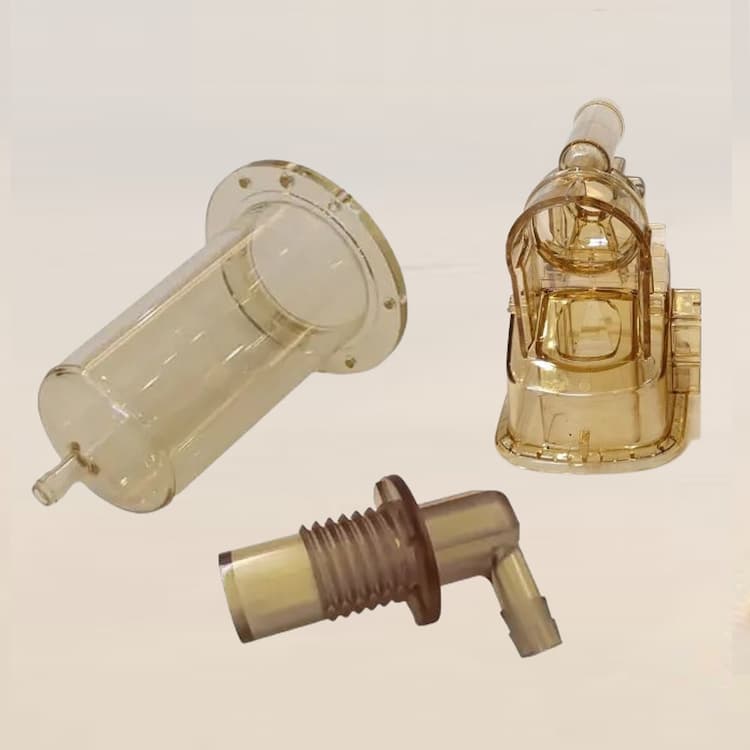
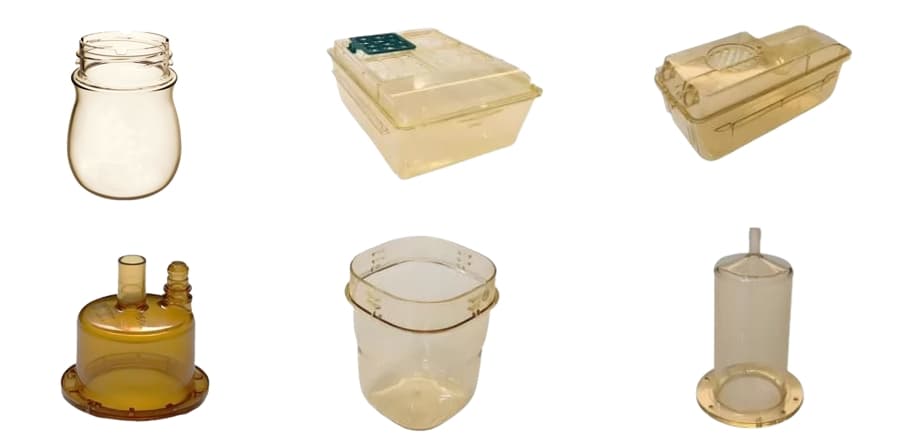
PPSU’s unique combination of heat resistance, toughness, chemical stability, and biocompatibility makes it ideal for applications in industries where reliability and safety are paramount. Through injection molding, it can be shaped into durable and precise components for a wide range of end uses.

  1. Medical and Healthcare
    PPSU is widely used in surgical instruments, sterilization trays, and reusable medical device housings due to its ability to withstand hundreds of autoclave cycles without losing mechanical strength or clarity. Dental tools, endoscopic components, and instrument handles are common examples. Its compliance with ISO 10993 and FDA standards ensures safety in direct patient contact.
  2. Food & Beverage Industry
    The material’s hydrolysis resistance and non-toxic nature make it suitable for repeated use in hot water and steam environments. PPSU is commonly found in baby bottles, reusable water bottles, coffee machine parts, and food service trays where long-term durability and safety are critical.
  3. Aerospace and Automotive
    PPSU provides lightweight yet strong alternatives to metals in fluid handling systems, fuel line connectors, and structural housings. Its stability under thermal and mechanical stress ensures reliability in demanding conditions, contributing to weight reduction and improved fuel efficiency.
  4. Electronics and Industrial Applications
    PPSU’s dielectric strength and resistance to chemicals enable its use in insulating components, connectors, pump housings, and industrial valves. It performs reliably in harsh operating conditions where other plastics would fail.

Across these sectors, PPSU injection molded parts consistently deliver superior durability and performance, reducing maintenance needs and extending product lifecycles.

Applications of PPSU Injection Molded Parts

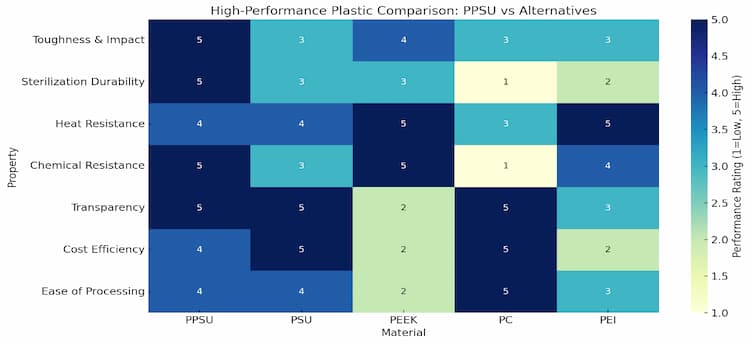
VI. PPSU Comparison with Alternative High-Performance Plastics


While PPSU is a versatile and durable material, it often competes with other high-performance plastics. Understanding its advantages and trade-offs helps manufacturers make informed material selection decisions for their applications.

  1. PPSU vs. PSU (Polysulfone)
    • PPSU offers superior toughness and impact resistance compared to PSU.
    • Both materials withstand sterilization, but PPSU tolerates more cycles without degradation.
    • PSU is less expensive, but PPSU provides greater long-term durability and reliability.
  2. PPSU vs. PEEK (Polyetheretherketone)
    • PEEK provides higher mechanical strength and chemical resistance, making it suitable for extreme environments like oil & gas and aerospace structural components.
    • PPSU, however, is more cost-effective, easier to mold into complex geometries, and offers excellent sterilization resistance, making it better suited for medical and consumer applications.
  3. PPSU vs. Polycarbonate (PC)
    • Both are transparent plastics, but PPSU outperforms PC in chemical resistance and heat stability.
    • PC is lower-cost and easier to process, but it is prone to stress cracking and cannot withstand repeated sterilization cycles like PPSU.
  4. PPSU vs. PEI (Polyetherimide)
    • Both materials share high heat resistance, but PPSU is tougher and more impact-resistant.
    • PEI has better rigidity and slightly higher strength, but PPSU’s superior hydrolysis resistance makes it better for applications involving frequent hot-water or steam exposure.


PPSU Comparison with Alternative High-Performance Plastics


Summary:
PPSU strikes a balance between performance, processability, and cost. While PEEK and PEI may offer higher mechanical strength in specific cases, PPSU stands out in applications requiring impact resistance, sterilization durability, and chemical stability at a more economical cost.

VII. Challenges and Limitations for PPSU injection molding


Although PPSU injection molding provides outstanding performance advantages, there are certain challenges and limitations that must be considered during material selection and manufacturing. Understanding these factors helps companies weigh trade-offs and plan accordingly.

  1. High Processing Temperatures
    PPSU requires melt temperatures in the range of 340–400 °C, which means specialized equipment and molds capable of withstanding extreme heat are necessary. Not all injection molding facilities are equipped for such conditions, potentially limiting production options.
  2. Extended Cycle Times
    Due to its high mold temperature requirements (160–200 °C), cooling cycles can be longer compared to commodity plastics. This can affect production efficiency and overall throughput.
  3. Higher Material Cost
    PPSU is significantly more expensive than standard engineering plastics such as ABS, polycarbonate, or nylon. While its durability offsets cost in many high-performance applications, it may not be suitable for cost-sensitive consumer products.
  4. Specialized Tooling and Expertise
    Successful PPSU injection molding requires precise mold design, balanced runner systems, and high-pressure injection capability. Toolmakers and processors need experience with high-performance polymers to minimize scrap and ensure consistent part quality.
  5. Limited Color Availability
    While PPSU is naturally transparent and can be tinted, its range of color options is more limited compared to commodity plastics. For industries where aesthetics are critical, this may require additional processing steps.

Despite these challenges, PPSU remains a preferred choice for industries where long-term reliability, safety, and performance outweigh cost and processing complexity. When applied strategically, its benefits far exceed the limitations.

VIII. Case Studies: PPSU Injection Molding in Action


Real-world applications of PPSU injection molding highlight how its unique properties translate into practical solutions across industries. Below are representative case studies demonstrating its value.

  1. Medical Sterilization Trays and Instrument Handles
    A leading medical device manufacturer replaced stainless steel sterilization trays with injection-molded PPSU alternatives. The PPSU trays not only reduced overall weight by 40% but also withstood over 1,000 autoclave cycles without cracking or discoloration. This change improved handling for hospital staff while reducing long-term replacement costs.
  2. Baby Feeding Bottles
    PPSU has become a preferred material for premium baby bottles due to its BPA-free composition, transparency, and sterilization resistance. Unlike polycarbonate bottles, PPSU bottles can endure repeated boiling, steam sterilization, or dishwasher cleaning without stress cracking, ensuring long-term safety and durability for infants’ daily use.
  3. Aerospace Fluid Handling Components
    In aerospace applications, PPSU injection molded connectors and housings have replaced heavier aluminum components. By reducing weight while maintaining mechanical strength and chemical resistance, PPSU parts contributed to improved fuel efficiency and reduced maintenance downtime, while also meeting stringent FAA compliance standards.
  4. Industrial Pump Housings
    An industrial equipment company adopted PPSU injection molding for pump housings exposed to aggressive cleaning chemicals and hot water. PPSU’s hydrolysis and chemical resistance allowed the pumps to operate reliably in harsh conditions, significantly extending service life compared to nylon or polycarbonate designs.

IX. Conclusion


PPSU injection molding has emerged as a cornerstone technology for producing high-performance plastic components in industries where safety, durability, and reliability are non-negotiable. With its exceptional toughness, sterilization resistance, thermal stability, and chemical resilience, PPSU bridges the gap between lightweight design and long-term performance.

Compared with alternatives like PSU, PC, PEI, and even PEEK, PPSU stands out for applications requiring repeated sterilization, hydrolysis resistance, and impact strength at a more economical cost. While it does present challenges—such as high processing temperatures and higher material costs—the benefits often outweigh these limitations when viewed over a product’s full lifecycle. From medical devices and baby products to aerospace connectors and industrial housings, PPSU injection molding consistently delivers value where other plastics fall short. As demand for lightweight, safe, and long-lasting materials grows, PPSU is expected to play an even larger role in advanced manufacturing and product innovation.

For companies seeking to combine design freedom, production scalability, and unmatched durability, PPSU injection molding offers a proven path forward. Partner with a trusted Injection Molding expert to accelerate your product development. GEMS-MFG is the comprehensive solution provider here for you. As a one-stop custom manufacturer, we provide a wide range of services, including rapid prototyping, mold making, injection molding, CNC machining, die casting, and more.

Whether your requirements involve intricate prototypes or precision parts, GEMS-MFG is committed to delivering an efficient and cost-effective solution tailored to your needs. Contact us today [INFO@GEMS-MFG] to explore our offerings and receive an instant quote. Your manufacturing goals are our priority.


PPSU Injection Molding: Properties, Benefits, and Applications in High-Performance Plastics

Why GEMS MFG?

Integrated Factory Resources

We are your one-stop manufacturing solution provider for customized products with the joint effort & support from our 120 partnership subcontractors mainly for the production of metals & plastics. We can expand much faster but the top management decide to keep GEMS a compact, dedicated and professional company, which allows our team to really focus and deliver on your projects without any excuse or compromise. We strive to be a long-term, reliable and trustworthy partner of our customers rather than just being a contractor, and look forward to growing the company with customers’ success.

Manufacturing Veteran Team

With the passing years, we are proud to build up a manufacturing veteran team with rich experience and full expertise to fulfill your specific demand. From mold making, injection molding, die casting, stamping and sheet metal, to 2nd processes like CNC machining, oil spraying, powder coating and chrome plating, and then assembling and packaging and related, we always have someone in house to be an expert to resolve the issues in different stages of product development. We also specialize in providing charger, cable and hub, plus other electronic accessories that support a complete set of product.

Strong Project Management

“Think global, execute local” is the principle of our work. Time, quality and cost are the three key elements to be considered throughout the product development from concept design to mass production. A detailed plan with weekly conference call update is a critical gateway to ensure these three key elements are successfully implemented, also assuring that all parties are on the same page. Communication is the Secret to Success . Everyone works independently to take care his own job, but together we are a team to get things done and are your daily eyes and ears onsite in China.

Flexible Operation & Customization

We offer a wide variety of products, such as mold, component and assembly product, and certain value-added services. For logo or branding product, we have in house resources to complete a color mix that can perfectly match a brand’s unique colors in fast and cost-effective way. Understood the client needs production parts but having a hard time to find a vendor since the order quantity is as low as 1000 or lower. GEMS is well set up for low volume injection molding or die casting projects. Surely our team is also capable of building SPI Class 101 mold that is designed & made for 1 million cycles or more of producing the same high quality parts consistently.