How to Find a Reliable CNC Machining Manufacturer in China for Custom Parts

I. Introduction: Why Choose China for CNC Machining Services?


China has become one of the world’s most competitive and capable hubs for CNC machining, attracting startups, SMEs, and global brands seeking high-precision custom machined parts. The country’s unique manufacturing ecosystem combines mature industrial clusters, a wide range of machining capabilities, and cost structures significantly more favorable than Western markets.

A major advantage is the speed and scalability of Chinese CNC manufacturers. Thanks to dense supplier networks and highly optimized workflows, projects can transition from drawing review to production within days. Whether you need aluminum parts for electronics, stainless steel components for medical devices, or tight-tolerance aerospace fixtures, China’s machining industry covers almost every material and precision requirement. At the same time, competitive pricing allows buyers to achieve substantial cost savings without compromising quality—provided the right supplier is chosen.

However, the large number of CNC shops also means quality levels vary significantly. Some factories focus on simple commodity parts, while others specialize in complex 5-axis machining, tight tolerance medical parts, or export-grade manufacturing. This makes selecting the right partner a strategic decision rather than a simple purchase.


II. How to Define CNC Machining Requirements for Chinese Manufacturers


Before contacting any CNC machining manufacturer in China, the most important step is to define your technical and business requirements with precision. Clear requirements not only help suppliers quote accurately but also reveal which factories truly have the capability to produce your parts. Many sourcing failures begin with unclear drawings, inconsistent tolerances, or missing specifications—leading to miscommunication, delays, or mismatched expectations.

Start by ensuring you have complete engineering files, ideally including 3D CAD (STEP, IGES, or SolidWorks) and fully dimensioned 2D drawings with GD&T where applicable. Specify critical dimensions, surface finish requirements, tolerances, threading standards, and any areas where deviation is unacceptable. If your part involves multiple mating components, note the functional relationships clearly. Chinese suppliers take engineering drawings seriously; the more precise your documents, the more reliable the quotation and production result.

Next, determine your material requirements upfront. For CNC machining in China, aluminum (6061, 6063, 7075, 6082), stainless steel (304, 316, 17-4PH), brass, copper, titanium, plastics, and composites are widely available. However, certain alloys may affect price, machining time, or tool wear. Indicating any required certifications—such as RoHS, REACH, DFARS, or aerospace-grade materials—helps filter suppliers with proper sourcing capability.

Also clarify your expected volume and production model: prototype, low-volume batch, or long-term mass production. Not all CNC shops handle all scales equally well; some excel in rapid one-offs, while others specialize in automated, high-volume machining cells. Include your preferred surface finish, such as anodizing, sandblasting, polishing, brushing, passivation, heat treatment, or coatings. Chinese factories coordinate these post-processes, but only if the requirements are explicit.

Lastly, define your quality expectations and inspection needs, including required measurement reports (e.g., CMM reports, material certificates, PPAP, FAI). Setting these expectations early allows you to filter non-professional suppliers immediately.

A well-prepared requirements package dramatically increases the accuracy of quotations, speeds up communication, and ensures you attract only the suppliers capable of delivering the machining quality your custom parts demand.

III. CNC Machining Capabilities: What to Look for in a China Manufacturer


Once your requirements are clearly defined, the next step is to evaluate whether a CNC machining manufacturer in China has the technical foundation to support your project. Not all factories possess the same level of equipment, programming expertise, or process control. A supplier’s core capabilities directly impact machining accuracy, repeatability, surface finish quality, lead time, and long-term scalability.

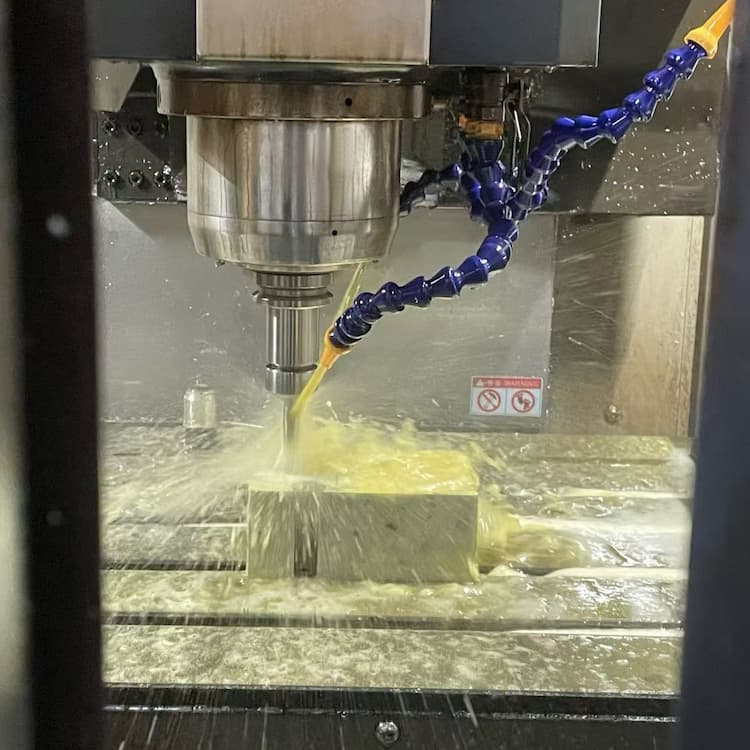
Begin by assessing the machine inventory and configuration. A professional CNC shop should have a balanced mix of 3-axis, 4-axis, and 5-axis CNC machining centers, as well as turning centers with live tooling if your parts include rotational features. Factories capable of ±0.01 mm or tighter tolerances will typically use Japanese or German machines (e.g., FANUC, DMG Mori, Mazak, Brother, Okuma). If ultra-high precision or optical components are required, ask whether they operate temperature-controlled machining rooms and high-speed spindles.

Evaluate the supplier’s programming and CAM engineering competency. Skilled programmers using advanced CAM platforms (Mastercam, Powermill, Fusion 360, UG NX) are essential for complex geometries, deep pockets, thin-walled structures, and 5-axis toolpaths. A common issue with under-qualified Chinese suppliers is suboptimal toolpath strategies, leading to vibration marks, poor surface consistency, or dimensional drift. Reviewing sample toolpaths or asking how they machine critical features can reveal their true technical depth.

Next, investigate their material handling and machining experience. A strong supplier should demonstrate expertise across different aluminum grades (6061, 6063, 7075, 6082), stainless steels (304, 316, 17-4PH), tool steels, brass, copper, titanium, and engineering plastics. Each material behaves differently—heat generation, tool wear, deformation risks—and experienced machinists know how to adjust speeds, feeds, coolant flow, and fixturing strategies accordingly.

Equally important is their fixture design capability. Advanced CNC machining relies heavily on robust and repeatable fixturing. Ask whether they design custom fixtures in-house, use modular quick-change systems, or rely on basic clamps. Poor fixturing is one of the largest contributors to part inconsistency, chatter, and tolerance failures.

Finally, assess their measurement and inspection resources. A technically capable Chinese CNC manufacturer should be equipped with CMM machines, height gauges, pin gauges, ring gauges, roughness testers, and calibration standards. Without proper metrology equipment—especially for tight-tolerance projects—accuracy cannot be guaranteed, no matter how good the machines are.

Evaluating these core technical capabilities helps you differentiate between entry-level CNC workshops and professional machining companies capable of delivering consistent, export-grade quality for international customers.

IV. CNC Machining Quality Control and Certifications in China


Technical capabilities alone are not enough; a reliable CNC machining manufacturer in China must also demonstrate a strong commitment to quality control. High-precision parts, tight tolerances, and repeatable production require robust quality assurance (QA) systems, certified processes, and professional inspection practices. Evaluating a supplier’s QA framework early can prevent costly errors, delays, and rework.

Begin by reviewing their certifications and compliance standards. ISO 9001 is the baseline for quality management, while specialized certifications such as ISO 13485 for medical devices or IATF 16949 for automotive parts indicate adherence to industry-specific quality protocols. Factories serving aerospace or defense sectors may also follow NADCAP standards or maintain rigorous material traceability documentation.

Next, assess the inspection equipment and procedures. Leading CNC shops should have Coordinate Measuring Machines (CMM), height gauges, optical projectors, roughness testers, and calibrated measuring tools. These instruments enable accurate verification of critical dimensions, surface finishes, and geometric tolerances. Ask how frequently tools are calibrated, and whether they maintain inspection logs for each batch.

Review the manufacturer’s in-process quality control practices. High-quality suppliers implement checks at multiple stages—material incoming inspection, first-article inspection, in-process verification, and final inspection. Advanced factories may also employ statistical process control (SPC) to monitor dimensional stability and detect deviations before parts leave the shop floor. This level of control is essential for high-mix, low-volume production, where consistency can be challenging.

Additionally, verify traceability and documentation capabilities. Export-grade CNC manufacturers often provide material certificates, inspection reports, FAI (First Article Inspection), and CMM reports along with each shipment. This transparency ensures that you can confirm material grade, dimensions, and finish meet specifications, reducing the risk of disputes or failures during assembly.

Finally, discuss quality culture and accountability. Experienced suppliers proactively flag potential issues, propose design adjustments, and clearly communicate tolerances and limitations. Factories without a strong quality culture may ignore subtle issues until parts fail, resulting in wasted time, money, and trust.

In summary, thoroughly evaluating a Chinese CNC supplier’s QA processes, certifications, and inspection capabilities ensures your custom parts meet the required specifications and provides peace of mind that production can scale without compromising quality.

V. Engineering Support and DFM Expertise for CNC Machined Parts


Even the most advanced CNC machines cannot guarantee a successful project if the manufacturer lacks engineering expertise. Engineering support and design-for-manufacturability (DFM) competence are critical factors when selecting a CNC machining supplier in China, especially for complex, high-precision, or multi-component parts. A capable supplier will not only execute your design but also help optimize it for cost, manufacturability, and quality.

Start by evaluating their CAD/CAM capabilities. Professional suppliers should be proficient in mainstream CAD platforms such as SolidWorks, AutoCAD, NX, or CATIA, as well as CAM software like Mastercam, PowerMill, or Fusion 360. This ensures they can interpret your designs accurately, simulate toolpaths, and foresee potential issues before cutting material. Misinterpretation at this stage is a common source of defects or costly rework.

Next, consider their DFM feedback and problem-solving skills. Experienced CNC engineers proactively identify areas in your design that may be difficult to machine, prone to deformation, or likely to produce poor surface finish. They may suggest changes to wall thicknesses, fillet radii, hole placement, or tolerances to reduce machining time and tool wear, improving both efficiency and final quality.

Check whether the supplier can support prototype iteration. The ability to produce functional prototypes, evaluate performance, and incorporate design adjustments before committing to full-scale production is a hallmark of a mature CNC supplier. This iterative process often reveals hidden challenges, such as stress concentrations, tolerance stack-ups, or fixture limitations, that can be addressed early.

Additionally, evaluate their experience with multi-material or complex assemblies. Factories capable of machining aluminum, stainless steel, titanium, and engineering plastics within the same project demonstrate flexibility and technical depth. They can advise on material selection, machining sequences, and post-processing compatibility, ensuring that parts meet functional and aesthetic requirements.

Finally, assess their communication and technical responsiveness. A strong engineering team asks detailed questions, documents decisions clearly, and keeps you informed throughout the project. Suppliers that treat engineering support as an add-on or fail to provide constructive feedback often struggle to meet tight tolerances or handle complex machining requirements reliably.

By selecting a Chinese CNC manufacturer with robust engineering support and proven DFM competence, you not only reduce production risk but also improve efficiency, reduce costs, and increase the likelihood of first-pass success in both prototypes and production parts.

VI. Assessing Production Capacity and Lead Times in China CNC Shops


When sourcing a CNC machining manufacturer in China, evaluating production capacity and lead times is as critical as assessing technical capabilities. A supplier may have advanced machines and skilled operators, but if they cannot handle your required volume or meet deadlines, the project risks delays, cost overruns, or compromised quality.

Start by reviewing the number and type of machines available. A professional CNC shop should have a mix of 3-axis, 4-axis, and 5-axis machining centers, as well as turning machines with live tooling if required. The availability of multiple machines allows parallel production, reducing bottlenecks and ensuring consistent throughput for both prototypes and production runs. Ask for details about machine utilization rates and maintenance schedules, as overbooked or poorly maintained equipment can lead to unexpected delays.

Next, consider the shop’s production workflow and scalability. Some factories specialize in low-volume, high-mix projects, offering flexibility for prototypes and complex parts. Others focus on high-volume, repetitive production with standardized processes. Make sure the supplier’s capabilities match your order type. For instance, a small-batch prototype run may require more hands-on attention and iterative quality checks, whereas mass production relies on automated setups and repeatable processes.

Lead times are another critical factor. Confirm the average turnaround for prototypes, small batches, and full production runs. Pay attention to potential delays due to tooling, material sourcing, or scheduling conflicts. Reliable suppliers will provide realistic timelines and buffer estimates rather than overpromising to secure your order. Request historical examples or case studies of similar parts to verify their track record.

Finally, assess their flexibility for urgent orders and contingency plans. Some Chinese CNC shops maintain spare machines, extra capacity, or flexible shifts to accommodate last-minute requests. Understanding how a factory handles unexpected changes—material shortages, design revisions, or urgent delivery—can prevent costly disruptions later.

By carefully evaluating production capacity and lead times, you ensure that the chosen CNC manufacturer in China can not only produce high-quality parts but also meet your schedule requirements consistently. This step bridges the gap between technical capability and reliable delivery, which is essential for long-term sourcing success.

VII. Supplier Communication and Project Management for CNC Machining in China


Effective communication and professional project management are often the deciding factors between a successful CNC machining partnership and a project filled with delays and misunderstandings. Even a technically capable Chinese manufacturer can produce subpar results if communication is slow, unclear, or inconsistent.

Start by evaluating responsiveness and clarity. A reliable supplier should respond promptly to emails or messages, ask relevant technical questions, and provide clear explanations of machining processes, lead times, and cost breakdowns. Pay attention to how they handle technical discussions—do they demonstrate understanding, propose solutions, and offer suggestions for manufacturability? This is often a strong indicator of experience and professionalism.

Project management practices are equally important. Top-tier CNC shops assign project coordinators or managers who oversee the production from drawing review to final inspection. They track progress, report on milestones, coordinate between engineering and production teams, and ensure that timelines are maintained. Ask whether they use project management tools, status reports, or visual dashboards to monitor work in progress.

Language and time-zone compatibility are practical considerations. Suppliers who communicate fluently in your preferred language reduce misinterpretation risk. Additionally, understanding overlapping working hours helps you resolve issues quickly without significant delays.

For larger or long-term projects, inquire about documented processes and workflow transparency. Professional factories maintain clear documentation for drawings, revisions, tooling, inspection records, and change requests. This ensures accountability and minimizes errors caused by human oversight or lost information.

Finally, assess how the supplier handles problem-solving and unexpected changes. Experienced manufacturers proactively notify customers of potential issues—such as tool wear, material shortages, or tolerance challenges—and offer viable solutions. A partner that communicates problems early is far more reliable than one that hides issues until the product fails inspection.

Strong communication combined with structured project management ensures your Chinese CNC machining partner can consistently deliver high-quality parts on time, reducing risk and making collaboration smooth and predictable.

VIII. CNC Machining Cost, Pricing Transparency, and Avoiding Cheap Quotes


Understanding cost structure is critical when selecting a CNC machining manufacturer in China. While competitive pricing is often a primary motivation for sourcing from China, the lowest quote can be misleading and may lead to quality issues, hidden fees, or project delays. A transparent cost breakdown and realistic pricing are essential to ensure both quality and reliability.

Start by analyzing the components of CNC machining cost. Major factors include:

  • Material costs: Depending on the alloy or grade, material prices vary significantly. High-strength aluminum (7075) or specialty stainless steels are more expensive than 6061, 6063 aluminum or 304 stainless steel.
  • Machining hours: Complex geometries, tight tolerances, deep pockets, and multi-axis operations increase cutting time. Suppliers should provide machining hour estimates that reflect part complexity.
  • Tooling and fixtures: Custom jigs, clamps, or specialized cutters may add one-time or recurring costs. Ensure the quotation specifies if tooling is included.
  • Surface finish and post-processing: Processes such as anodizing, polishing, coating, or heat treatment can substantially affect cost.
  • Inspection and quality control: High-precision parts require thorough inspection, including CMM or FAI reports, which may be charged separately.

Evaluate whether the supplier provides transparent quotations. A professional manufacturer clearly separates each cost element and explains assumptions. Avoid quotes that only offer a lump sum without details, as this can hide additional charges or compromise quality.

Be cautious of extremely low quotes. While cost savings are desirable, the cheapest supplier may cut corners by using lower-quality materials, skipping inspection steps, or subcontracting critical operations without disclosure. Instead, aim for value-based selection, balancing cost with technical capability, quality assurance, and reliability.

Finally, consider long-term cost implications. A slightly higher upfront cost for a reliable, communicative, and quality-focused supplier can prevent expensive rework, delayed shipments, or customer dissatisfaction. Transparency, trust, and realistic pricing are far more valuable than chasing the lowest number.

By understanding CNC machining cost components and insisting on transparent, realistic quotations, you ensure that your sourcing decision prioritizes both quality and efficiency, leading to successful, repeatable production.

IX. Step-by-Step Process to Select a Reliable CNC Machining Manufacturer in China


Choosing the right CNC machining partner in China requires a structured, methodical approach. Following a clear step-by-step process helps ensure technical capability, quality, cost-effectiveness, and long-term reliability.

Step 1: Shortlist Potential Suppliers
Start with online directories, trade shows, industry references, or existing networks. Focus on manufacturers with relevant experience, certifications, and proven capabilities in your material and part type.

Step 2: Evaluate Technical Capabilities
Review each supplier’s machinery, tooling, CAM/CAD capabilities, and material expertise. Confirm that they can achieve the tolerances, finishes, and complexity your project requires.

Step 3: Assess Quality Assurance Systems
Check for ISO or industry-specific certifications, inspection equipment, and in-process quality controls. Ask for sample reports, FAI documentation, and references to verify consistency.

Step 4: Review Engineering Support and DFM Skills
Engage with the supplier’s engineering team to evaluate their design-for-manufacturability guidance, prototyping capabilities, and willingness to provide proactive technical suggestions.

Step 5: Request Detailed Quotations
Obtain transparent, itemized quotes including material, machining hours, tooling, post-processing, and inspection. Compare value, not just price, to avoid cheap-quote pitfalls.

Step 6: Conduct Communication and Project Management Evaluation
Assess responsiveness, clarity, and project tracking methods. Ensure the supplier provides a dedicated point of contact or project manager to oversee your order from start to finish.

Step 7: Verify Production Capacity and Lead Times
Confirm that the factory can handle your required volume and timeline, whether for prototyping, small-batch, or mass production. Review their workflow, machine availability, and contingency plans.

Step 8: Mitigate Risks and Protect IP
Sign NDAs, limit access to proprietary designs, establish golden samples, and clarify subcontracting policies. Ensure documentation and traceability are in place to protect quality and IP.

Step 9: Conduct Sample Production or Pilot Run
Before committing to large orders, test the supplier with a small batch or prototype. Evaluate quality, delivery performance, and responsiveness to adjustments.

Step 10: Confirm Long-Term Partnership
Once all criteria are met, formalize contracts including quality standards, lead times, pricing, and IP protection. Maintain ongoing communication and periodic reviews to ensure continuous performance.

Following this systematic approach gives buyers confidence in selecting a CNC machining manufacturer in China that delivers precision, reliability, and value. It transforms the sourcing process from a gamble into a strategic, repeatable workflow that supports successful product development and long-term partnerships.
X. Managing Risks and Protecting IP with Chinese CNC Manufacturers


Sourcing CNC machined parts from China offers many advantages, but it also introduces risks, including quality inconsistencies, material substitution, subcontracting without disclosure, and potential intellectual property (IP) exposure. Proactively managing these risks is essential to protect your investment and ensure project success.

Intellectual property protection should be addressed at the very beginning. Use Non-Disclosure Agreements (NDAs) to safeguard CAD files, drawings, and proprietary designs. Limit access to sensitive documents and, when possible, share only essential manufacturing data. Reputable suppliers respect IP and are familiar with legal protections for international clients.

Quality and consistency risks can be mitigated by thorough supplier evaluation, including references, certifications, and inspection capabilities. For critical or high-precision parts, request first-article inspections (FAI), sample runs, or CMM measurement reports. Establishing golden samples ensures there is a benchmark for acceptable quality before full production begins.

Subcontracting and transparency are additional concerns. Some factories may outsource complex operations without informing the customer, which can lead to inconsistent quality. Ask suppliers explicitly about in-house capabilities, subcontracting policies, and oversight mechanisms. Clear contractual agreements specifying allowed subcontracting and accountability help reduce surprises.

Contingency planning is also key. Discuss how suppliers handle urgent design changes, material shortages, or machine downtime. Reliable manufacturers maintain backup strategies, extra capacity, or flexible scheduling to minimize disruption.

By addressing IP protection, quality control, subcontracting transparency, and contingency planning early, buyers can significantly reduce the risks associated with sourcing CNC machined parts in China. Taking these precautions ensures a secure, predictable, and long-term partnership.

XI. Conclusion


Sourcing a reliable CNC machining manufacturer in China involves more than just finding the lowest price—it requires careful evaluation of technical capabilities, quality assurance, engineering support, production capacity, and communication practices. By clearly defining your part requirements, assessing machinery and process expertise, verifying certifications and inspection systems, and prioritizing transparency in cost and IP protection, you set the foundation for a successful manufacturing partnership.

Combining these factors with proactive project management, realistic lead times, and structured supplier selection ensures consistent, high-quality output while minimizing risk. Following a step-by-step approach not only streamlines the sourcing process but also builds a long-term relationship with a capable manufacturer, empowering you to bring complex, custom CNC machined parts from concept to production efficiently and confidently.

Partner with a trusted CNC Machining expert to accelerate your product development. GEMS-MFG is the comprehensive solution provider here for you. As a one-stop custom manufacturer, we provide a wide range of services, including rapid prototyping, mold making, injection molding, CNC machining, die casting, and more.

Whether your requirements involve intricate prototypes or precision parts, GEMS-MFG is committed to delivering an efficient and cost-effective solution tailored to your needs. Contact us today [INFO@GEMS-MFG] to explore our offerings and receive an instant quote. Your manufacturing goals are our priority.


How to Find a Reliable CNC Machining Manufacturer in China for Custom Parts

Why GEMS MFG?

Integrated Factory Resources

We are your one-stop manufacturing solution provider for customized products with the joint effort & support from our 120 partnership subcontractors mainly for the production of metals & plastics. We can expand much faster but the top management decide to keep GEMS a compact, dedicated and professional company, which allows our team to really focus and deliver on your projects without any excuse or compromise. We strive to be a long-term, reliable and trustworthy partner of our customers rather than just being a contractor, and look forward to growing the company with customers’ success.

Manufacturing Veteran Team

With the passing years, we are proud to build up a manufacturing veteran team with rich experience and full expertise to fulfill your specific demand. From mold making, injection molding, die casting, stamping and sheet metal, to 2nd processes like CNC machining, oil spraying, powder coating and chrome plating, and then assembling and packaging and related, we always have someone in house to be an expert to resolve the issues in different stages of product development. We also specialize in providing charger, cable and hub, plus other electronic accessories that support a complete set of product.

Strong Project Management

“Think global, execute local” is the principle of our work. Time, quality and cost are the three key elements to be considered throughout the product development from concept design to mass production. A detailed plan with weekly conference call update is a critical gateway to ensure these three key elements are successfully implemented, also assuring that all parties are on the same page. Communication is the Secret to Success . Everyone works independently to take care his own job, but together we are a team to get things done and are your daily eyes and ears onsite in China.

Flexible Operation & Customization

We offer a wide variety of products, such as mold, component and assembly product, and certain value-added services. For logo or branding product, we have in house resources to complete a color mix that can perfectly match a brand’s unique colors in fast and cost-effective way. Understood the client needs production parts but having a hard time to find a vendor since the order quantity is as low as 1000 or lower. GEMS is well set up for low volume injection molding or die casting projects. Surely our team is also capable of building SPI Class 101 mold that is designed & made for 1 million cycles or more of producing the same high quality parts consistently.